
I am going to teach CS3240 at BGSU again in the Spring semester, 2026.
This time I am updating it for “the AI age”. Having students do some user-centered design activities “by hand”, some with generative AI tools, and lots of critiquing of AI systems. UI design for AI systems, e.g., when we can do better than text-based chat. And exploring how UX roles, teams, and professions are changing (and not changing).
LOTS to figure out along the way.
And I am hoping to do different kinds of industry engagement. Here is what I drafted.
BGSU Industry Engagement Opportunity: User Experience in the AI Age
Keith Instone is once again sharing his 30 years of experience as a user experience practitioner with BGSU students when he teaches Computer Science 3240 (Usability Engineering) in the Spring 2026 semester.
You have an opportunity to collaborate with him as he updates the course “for the AI age” to help undergraduate software engineering students:
- Understand the science of experiences, esp. how users interact with “intelligent” software systems
- Learn traditional user-centered design methods, updated for AI-based applications
- Study how organizations are evolving their teams and capabilities to deliver great experiences as AI systems improve productivity, support creativity, and personalize customer experiences
- Explore how the professions of software development and UX are changing as the students start to enter the workforce and do these “jobs of the future”
As background, BGSU developed this course as one of the first user-centered design courses for undergraduate CS students in the country back in the mid 2000s. Two BGSU CS faculty wrote a textbook as part of developing the new course. Twenty years later, Keith is updating the course to be part of BGSU’s leadership in AI education.
As an industry partner for the class, you can help put student learning in a context of industry best practices and challenges. You can also get a glimpse into what some of the best students in the region are capable of.
You can provide AI-based projects or share your stories of defining, designing, and delivering human-centered AI systems for your organization.
The AI systems can vary widely, a few possible examples:
- “Old fashioned” machine learning, such as for predictive maintenance
- Productivity tool implementing a new business process, built on a LLM platform
- Text-based chatbot for customer service
- Startup trying to solve an important social problem, like mental health, using generative AI
- Agent-based system exploring new ways to automate work
There are several ways you and your organization can be involved in the class:
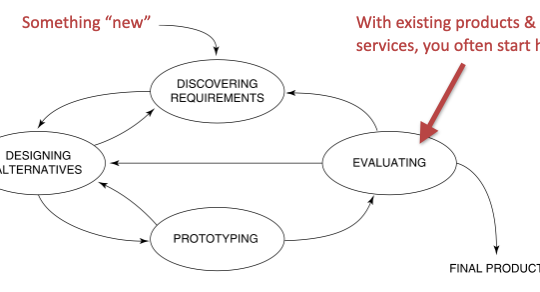
(1) Frame a semester-long project where teams of students go through the UX design lifecycle of user research, design, prototyping, and evaluation. For example, you may have an idea for an AI-enabled system lower on your roadmap that students can learn from, giving you insights into the project’s practicality and potential value.
You would help define the scope of the project before the semester started and then check in with student progress as the semester goes along. You might want to come to the last week of class as student teams present their work.
(2) Provide an existing, in-production AI-enabled website, application, or service for the students to explore new interaction models for (e.g., design a graphical user interface for a text chatbot) or test the usability of (e.g., create typical tasks, have representative users try to perform those tasks, and measure user performance).
As just 1 assignment for the students during the semester, you would need to provide some documentation about the system (such as target users and key tasks), and be available for questions from the students for a few weeks. You would be encouraged to review the deliverables by the students to see if you find any business value.
(3) Be a guest presenter in the class (in person or remote), where you can share “stories from the trenches” about your work to create human-centered AI systems. Students would study background material before your visit and come up with questions to ask, so it would be less of a presentation by you and more of a discussion with the students.
If you come to campus, we could line up visits to other classes (such as in graphic design or media and communications). We can also arrange a public presentation for students across campus, BGSU faculty and staff, and other people from industry in Northwest Ohio.
Other ways to collaborate are possible: we are open to any and all ideas.
Let’s talk about how you can share your expertise with students, learn from the students’ work on your challenges and systems, and help BGSU develop the one of the best undergraduate user experience classes for the AI age in the country.